




Brand Power: How strong identities help flooring brands stand tall and rise above the noise – Nov 2025
By Meg Scarbrough
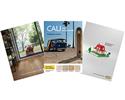
The flooring business has always been about product-design, performance, price. But in today’s hyper-competitive marketplace, where hard surface visuals blur together and private-label lines multiply, the greatest differentiator may no longer come from the factory floor. It’s coming from the story. Across the industry, successful manufacturers see that branding is not just a logo or slogan but a living reflection of who they are-and how they make people feel. In a category long defined by specs and square footage, some companies are finding traction not through louder claims, but through voices that ring true. As digital marketing flattens the playing field and price competition intensifies, brands that lack emotional identity risk becoming commodities. “You can buy the same product from 150 different sources,” says one executive. “So, the question is: why buy from you?” The answers are increasingly personal, rooted in place and purpose. From the Southern charm of Southwind to the West Coast ease of Cali, and the emerging confidence of International Flooring Company (IFC) to the brand stewardship for AHF Products, firms are proving that authenticity is not a luxury-it’s a survival strategy. These brands share one thing in common: they know who they are, and they stay true to it. TELLING THE STORY At the core of every lasting brand is self-knowledge. “Whoever’s at the head of that company dictates its culture,” says Seth Gladden, founder of Gladden Group, a Chattanooga, Tennessee-based marketing firm. “That culture needs to be fostered, talked about and lived-that’s where the story begins.” Gladden helped Southwind develop its now-familiar “Bless Your Heart” campaign, a cheeky nod to the South and a reminder that this Dalton-based manufacturer is more than its carpet roots. For the uninitiated, in the South, “bless your heart” can be used as a statement of sincerity or one of sarcasm. In a recent ad, Southwind uses the phrase to playfully draw attention to its line of products. “Oh, you thought we just made carpet? Bless your heart.” It then goes on to list their other flooring offerings. Southwind’s branding emphasizes warmth and approachability in a market that often takes itself too seriously. “A lot of people are surprised by the breadth of their portfolio,” Gladden says. “They’ll say, ‘Wait, they make hardwood too?’ So, we built a campaign that pokes fun-in a loving way-while educating the audience.” “We’re a Southern company, and we’re not shy about that,” says Drew Hash, president of Southwind. “We mix a little humor with what we call Southern hospitality and craftsmanship-just doing the right thing the first time, transparency, no surprises. That’s the Southwind way.” At Cali, self-definition takes another form-California living distilled into flooring. “We’re not trying to be everything to everyone,” Cali CEO Doug Jackson explains. “Our brand is about fresh, coastal-inspired designs with the durability to handle real life. It’s indoor-outdoor ease, natural aesthetics and quality.” That clarity of purpose shapes every decision, from product design to retail presentation. “Every product has to answer the same question: Does this feel like Cali?” Jackson says. “Whether it’s hardwood, vinyl or laminate, if it doesn’t capture that California vibe and deliver on quality, it doesn’t carry our name.” For IFC, founded in 2023 by members of the Dossche family, knowing who you are also means knowing where you come from. “We’re fortunate to have a team with decades of industry experience,” says Greg Wrenn, vice president of product and brand. “But that heritage only matters if you use it to build something new. For us, it’s about trust-proving that even as a young brand, we’ll do what we say we’re going to do.” Wrenn says IFC’s advantage is agility. “Larger manufacturers do great work, but it can take time for big ships to turn,” he notes. “We can listen, react and make changes quickly. That’s the beauty of being small but experienced.” Interface’s Anna Webb Waldron, vice president of global marketing, describes a similar process of purposeful evolution. “Today, Interface stands for the idea that a company can be more and do more for the world than just make products for profit,” she says. “That’s really the heart of our global brand attitude, Made for More. We don’t ask customers to sacrifice design for performance, or quality for sustainability. We believe they can have it all, and we’re the partner who can give it to them.” AHF Products’ identity comes from mastering the balance between heritage and scale. “AHF is the company name, and we see it much like the role Procter & Gamble plays in the consumer goods space-a trusted corporate entity that stewards a diverse and highly strategic brand portfolio,” says Catherine del Vecchio, vice president of marketing. “While AHF as a corporate umbrella is essential in terms of shared manufacturing excellence, operational scale and distribution partnerships, the real emotional connection with customers happens at the product brand level. Brands like Bruce and Armstrong Flooring carry the equity, recognition and heritage that customers trust.” BRANDING THAT WORKS BEFORE THE SALE A decade ago, flooring manufacturers sold largely through feature lists-waterproof cores, dent resistance, color ranges. Today, the brands leading the conversation are those that do much of the emotional work before a shopper ever steps into a store. Jackson points to an interior designer who discovered Cali through social media. He recalls, “She spent weeks looking for the perfect light wood-look floor. Then Cali popped up on her social media-coastal-themed branding, super-light tones and realistic-looking LVT-exactly what she’d been looking for. The next day, she and a friend walked into a retailer, found our Longboards display with the surfboard, and both placed orders that same day.” That sort of pre-sale brand awareness directly impacts margin. “When customers arrive already wanting Cali, retailers aren’t competing on price,” Jackson explains. “They’re fulfilling a preference.” At Mirage, whose Canadian hardwoods have long been known for craftsmanship, emotional storytelling also plays a central role. Anne-Marie Quirion, the company’s marketing communications manager, says its Anti-Plastic Campaign emerged from a simple question: How do you make authenticity and sustainability visible? The answer: A home built entirely from toy bricks paired with the tagline “Only this kind of home should have plastic floors.” “We wanted to position real hardwood not only as a premium aesthetic choice but also as an ethical and environmentally responsible alternative to plastic materials,” Quirion explains. The campaign spurred conversations across social media-even among competitors. Mirage extended it with in-store visuals and a retailer education leaflet, creating consistency from ad to showroom floor. “It’s about blending creativity, education and science,” Quirion says. “That integration strengthened our story as a champion of authentic, responsible design.” EMPOWERING THE RETAIL VOICE In flooring, brand storytelling rarely stops at the manufacturer; it’s carried to the consumer through the retailer. For most companies, the primary audience for marketing isn’t the homeowner but the sales associate on the showroom floor, whose belief in the brand determines whether that story connected. Manufacturers are now designing campaigns with those intermediaries in mind. Rather than spending heavily on national consumer advertising, they are investing in assets that make it easy for dealers to champion the brand: clear messaging, consistent visuals and digital content that translates emotion into talking points. “One of the biggest mistakes manufacturers make is trying to speak directly to consumers without properly equipping their retailers first,” Quirion says. “When that happens, the brand message can become fragmented or inconsistent-and it risks creating confusion for the consumer.” Mirage instead builds its marketing mix around dealer empowerment-from high-end showrooms and digital tools to factory tours. “We also invest heavily in training sessions and factory tours, helping our partners become true ‘wood experts’ themselves-fully equipped to tell our story authentically,” she says. “Finally, our team collaborates with them on local advertising campaigns, ensuring their communications remain consistent with our brand identity while still resonating with their own market.” Southwind applies similar logic at a smaller scale. “We look at our retailers as an extension of our family,” Hash says. “We’re small enough to personalize, but big enough to provide the support and quality they need. It’s an old-fashioned approach, maybe, but it works.” That relationship-first model directly affects pricing power. “We have to work hard to set ourselves apart,” Hash notes. “Branding helps do that. And we protect our retailers with limited distribution-we’re selective, not everywhere. That way, they don’t have to worry about being undercut.” At AHF Products, segmentation and clarity are the foundation for brand strength. “Each brand is aligned with a specific channel and customer demographic to preserve pricing integrity and minimize overlap,” says del Vecchio. “Education and clarity are critical. We don’t want retailers defaulting to price-we give them stories built around lifestyle, value and legacy.” Wrenn echoes that sentiment from IFC’s perspective. “Our biggest challenge was earning trust,” he says. “Retailers have been burned before, so we have to show up, deliver and communicate clearly. That’s how you build credibility. You can’t just tell people you’re dependable-you have to prove it every week.” Gladden puts it bluntly: “If the people on the showroom floor don’t believe in your brand, all the marketing in the world won’t matter.” WHEN AUTHENTICITY BECOMES CURRENCY Across interviews, one word kept resurfacing: authenticity. Whether it’s Mirage’s respect for nature, Southwind’s family ethos or Cali’s coastal DNA, authenticity gives brands permission to connect emotionally while commanding a premium. Jackson says that’s how Cali keeps sustainability from becoming a buzzword. “We only say what we can back up. We started with bamboo over 20 years ago because it made sense. Bamboo regrows in five to seven years without replanting. Our engineered hardwoods use premium wood as veneer over sustainable cores, so you get four times more flooring from each tree. These are just construction realities.” At Mirage, authenticity is expressed through humor and warmth. In its beloved “Wood Experts” series, forest animals peer through windows in awe at Mirage floors-a clever suggestion that even nature recognizes good. “It’s playful and charming,” says Quirion, “yet it conveys a deep message: real wood inspires admiration, even from nature itself.” Del Vecchio sees authenticity as the thread connecting AHF’s family of brands. “Bruce is the most recognized hardwood brand in the industry-it’s a name that resonates across generations,” she says. “‘Everyone wants Bruce’ isn’t just a saying; it’s a truth we hear from pros, retailers and homeowners alike.” THE PRICE OF MEANING For flooring manufacturers, few phrases carry as much anxiety as “price erosion.” When import volatility and private-label competition blur distinctions, branding becomes the last line of defense. Interface demonstrates how purpose-driven branding protects value over time. “Our customers don’t come to Interface just because they need flooring-they come because they believe in what we stand for,” Waldron says. “People want to feel connected to the companies behind the products they buy. Our focus on design, performance, and sustainability helps us stand out. That trust and partnership build loyalty.” Del Vecchio notes that AHF’s brand segmentation is key to avoiding race-to-the-bottom competition. “By maintaining clear segmentation-Bruce at the top of the market, Hartco offering trend-forward value through distribution, Robbins positioned for direct retail-AHF maximizes reach without internal competition,” she explains. “We protect value by ensuring every brand has a reason to exist.” Jackson echoes that sentiment from the opposite coast. “Our partners report 30% higher close rates and 40%-plus margins on Cali products because customers come in wanting the brand, not just the cheapest option,” he says. “That only works when your brand creates real preference. You can’t fake that with a logo and some nice photos. It has to be authentic all the way through.” DESIGNING THE NEXT CHAPTER As the market evolves, brands are experimenting with how to keep stories fresh without losing their roots. At Cali, that means blending lifestyle and technology. “The story hasn’t changed; we’re still about coastal-inspired design and quality construction,” Jackson says. “What’s evolved is how we tell it. We’re investing in content creation and influencer partnerships because that’s where customers discover brands now. We’re also getting smarter about how we merchandise in showrooms. The surfboard displays, wine barrel fixtures for hardwoods-we’re creating experiences, not just sample racks.” Southwind is thinking along similar lines, pairing humor with heritage. After “Bless Your Heart,” the company tested a follow-up campaign titled “Spill the Tea,” leaning further into playful Southern idioms. “We’ve learned a few things from that first round,” Hash laughs. “There are so many sayings we can have fun with. If people are talking about you, that’s a good thing.” At Mirage, the next campaign will focus on “Peace of Mind,” promising to bring back a familiar character from earlier ads-a nod to continuity that loyal retailers and consumers will recognize instantly. For IFC, the next chapter is about steady growth and trust-building. “We’re building the airplane as we fly it,” Wrenn says. “But that’s what makes it exciting. We have the experience of a legacy brand and the freedom of a startup. Branding starts with trust-everything else builds on that.” BRAND LESSONS FOR A CROWDED MARKET Branding alone can’t fix poor product or service, but when done right, it multiplies the impact of both. Across these interviews, several universal lessons emerged: • Authenticity first. Every brand that succeeds builds from truth-whether that’s Cali’s California lifestyle, Mirage’s real-wood expertise or Southwind’s Southern hospitality. • Empower the retailer. Strong B2B branding begins with dealer confidence. If the people on the showroom floor don’t believe in your brand, customers won’t either. • Consistency matters. Every touchpoint-print ad, website, training, showroom-must speak the same language. Fragmentation erodes trust. • Humor and humanity go a long way. Flooring may not be “sexy,” but campaigns that surprise or charm-from beavers peeking through windows to “Bless Your Heart”-stick with people. • Brand strength protects margin. When a buyer wants you, price stops being the headline. LOOKING AHEAD As the flooring market braces for another year of sluggish demand and cost pressure, the brands investing in story, design and culture appear best positioned to thrive. Several interviewees referenced Cali unprompted-a telling sign that lifestyle-driven branding now shapes even B2B conversations. Ultimately, in an industry where most products can be replicated, the one thing that can’t be copied is identity. And in 2025, identity may be the most valuable product a brand can sell.
CASE STUDY: TRUETOUCH FLOORS Founded in 2019 by industry veterans Josh McGrane and Stephen Yates, TrueTouch Floors set out to stand apart in a crowded market by pairing bold creative with authentic sustainability. The company rejects safe, formulaic advertising in favor of humor, cinematic visuals, and real-life storytelling. Campaigns like “Fake vs. Real” reflect that philosophy, aiming to connect with younger consumers while remaining relatable across generations. Behind the creative is a measurable environmental commitment, including partnerships with 4ocean and One Tree Planted that tie each sale to traceable ocean plastic removal. TrueTouch’s distribution network includes TriWest, Readers, Adleta, William M. Bird, Certified and Halebian, supporting national reach alongside its distinctive brand voice. Brand Pillars
Authenticity: Tangible sustainability with provable results Relatability: Humor and storytelling that resonate across audiences Fearlessness: Willingness to break format and stand out visually Transparency: Traceable environmental impact and clean product chemistry

Join Our Newsletter
Get the latest flooring industry news delivered weekly.