


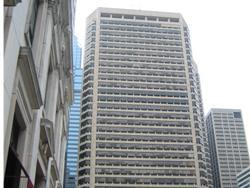
New York, NY, December 2, 2025-"Over the past two decades, developers in New York have converted nearly 30 million square feet of office space into residential living, with the pace of transformation picking up in recent years,” reports the Wall Street Journal.
"Most office buildings were considered too wide and mechanically complex to repurpose into apartments with kitchens, bathrooms and bedrooms. But New York developers are solving those problems with new architectural hacks-cut-through notches, carved light wells, and strategic wall-offs of interior cores that create space for new residential floors.
“New York saw its first conversion boom after the recession of the early 1990s, mostly in lower Manhattan. Back then, office-building prices also plummeted and the city and state offered tax incentives. Between 1995 and 2006, developers used these incentives to convert around 100 office buildings.
“Conversions continued between 2005 and 2019, especially downtown. Developers converted another 125 buildings with 19.5 million square feet. Conversions slowed between 2015 and 2019 because office demand was strong.
“Conversions picked up after the pandemic hit, driving office vacancy to over 20%, up from 11.1% in 2019, according to Cushman & Wakefield.
“To encourage even more conversions, the state legislature last year approved new tax abatements. As many as 25 future office conversions with 8.8 million square feet of space are in the planning stages throughout Manhattan.
“The city, meanwhile, approved zoning changes, greatly expanding the number of buildings eligible for conversions. Since the pandemic, half of all conversions announced are in Midtown.
“Some of the most prominent conversions in Midtown include the former Pfizer headquarters on 42nd Street, 5 Times Square and 135 East 57th Street.
“This is 750 Third Avenue in Midtown East, a 35-story office building built in 1958 and purchased by SL Green in 2004. After Covid-19 hit, its occupancy fell to 17%.
“SL Green hired architecture firm Gensler to figure out whether residential conversion made sense. Here’s the development plan they came up with:
“The building podium was too big for apartments to get sufficient light and air. The solution: demolish about 25,000 square feet on floors four through 17 to create a notch facing Third Avenue.
“Under city rules, demolishing part of the building allowed developers to shift that floor area elsewhere on the site and use it for a new residential tower.
“The project is expected to be completed in 2029 with 680 apartments. To attract residents to 750 Third, SL Green plans to offer amenities including a party room, sundeck, screening room and fitness center.
“Inside 750 Third, the sixth floor looked like your typical open office-space layout with room for desks, cubicles, bathrooms and elevators.
“With the new notch, 38 new apartments are created just on this floor alone, stretching deep to give each space as much sunlight as possible.
“Beams are strategically hidden within inner walls.
“The Bedrooms are all situated near the outer exterior to stay in compliance with New York building codes and bring sunlight into the rooms.
“Bathrooms are situated on the interior of the building because daylight is not needed.
“Currently at 818,000 square feet, 750 Third is one of the largest recent office-to-residential conversions in Manhattan. Its size continues a trend of larger footprints among more recent conversion projects.
“Even the pickup in conversion will make only a small dent in New York’s more than 75 million square feet of surplus office space. But Manhattan has one advantage other cities can’t match: a rental market with median $4,500 monthly rents for a one-bedroom.
“Design breakthroughs pioneered in Manhattan will likely accelerate the pace of conversion in New York as well as the rest of the country. The national pipeline currently includes 78,500 units, up from 23,000 in 2022, according to RentCafe.com. And as these projects multiply, the playbook keeps expanding.
“‘There are more case studies that prove the naysayers wrong,’ said Robert Fuller, principal of Gensler.”


Join Our Newsletter
Get the latest flooring industry news delivered weekly.