Designer Forum: A 1930s basement is transformed into a fully accessible mother-in-law suite – Feb 2026
By Molly McCabe
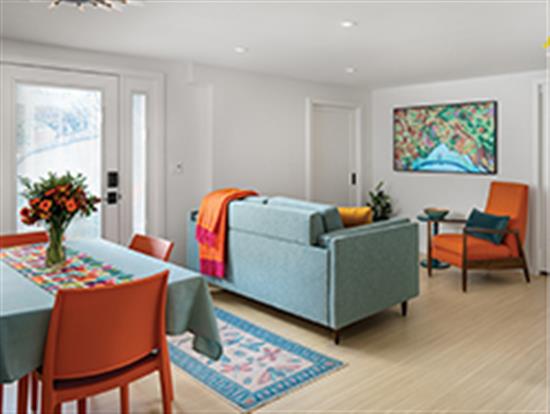
An 800-square-foot daylight basement in a 1932 brick Tudor home in Washington State-once dark, cluttered and largely underutilized-has been transformed into a bright, cheerful and fully wheelchair-accessible mother-in-law suite. Designed by McCabe By Design, the project demonstrates how thoughtful planning and material selection can unlock the potential of older homes while supporting accessibility, wellness and long-term flexibility.
What was previously a space dominated by mechanical systems and storage is now a welcoming residence that embraces the idea of living large within a compact footprint. Throughout the project, universal design principles guided decisions at every scale, ensuring that accessibility is seamlessly integrated rather than visually emphasized.
STRUCTURAL UPGRADES AND CODE COMPLIANCE
As is often the case with homes built in the early 20th century, the basement presented immediate challenges related to structure, systems and code compliance. The original concrete slab was ground and sealed to create the flattest possible surface, simplifying finish installation while preserving precious ceiling height needed to meet the minimum 7’ code requirement.
Relocating the original waste drain required selective jackhammering of the slab to create proper connections for the shower drain and other plumbing fixtures. While invasive, this step was critical to achieving a fully accessible bathroom layout that would function safely and efficiently over time.
To improve thermal comfort and energy performance, a new 2”x6” interior perimeter framing wall was added to accommodate R-21 insulation. The existing forced-air furnace and air handler were removed and replaced with ductless mini-split systems-two serving the suite and three supporting the upper floors-allowing for quieter operation, improved efficiency and independent temperature control.
Code-required egress windows and window wells were introduced, bringing natural light into the space while also improving emergency access. A structural brick fireplace that could not be removed was instead carefully framed and drywalled, allowing it to integrate cleanly into the new interior rather than remain a visual obstruction.
DESIGNING FOR ACCESSIBILITY AND FUNCTION
With the structural groundwork complete, the design took shape as a fully wheelchair-accessible home focused on clarity, comfort and ease of use. High-contrast finishes were selected to support wayfinding and visual identification, while generous circulation paths ensure comfortable movement throughout the suite.
Despite its compact size, the space feels open and generously proportioned. The kitchen offers ample storage and counter space and is designed to accommodate two people-or a wheelchair user-without compromise. Appliance placement and clearances were carefully planned to support independent use.
The wet-room-style bathroom provides a safe, open layout with sufficient room for caregiver assistance if needed, reinforcing the suite’s ability to adapt to changing mobility needs over time.
The combined entry, dining and living areas-anchored by a glass street-level front door with built-in blinds-create a welcoming environment that supports both daily living and social interaction. A spacious storage closet further enhances organization and usability.
A COMPACT LAYOUT THAT LIVES LARGE
A private office/dressing room and bedroom establish a clear separation between public and private zones, lending the suite a sense of order and calm. Storage was intentionally integrated throughout the plan to minimize visual clutter and maximize function.
A linen closet with interior lighting is accessible from both the living room and bathroom, while a divided coat closet accommodates not only outerwear but also household tools such as vacuums and brooms-details that quietly support day-to-day living.
Material selection prioritized durability, low maintenance and sustainability, with particular attention given to flooring. Given the suite’s compact footprint, one continuous flooring material was used throughout-excluding the bathroom-to avoid a visually fragmented appearance.
Additionally, the exterior door threshold and ceiling height limitations required a flooring solution that was low profile yet moisture resistant. Linoleum sheet flooring from Forbo Marmoleum’s Linear Striato collection in Desert Sand met those requirements while contributing warmth, resilience and long-term performance.
In the bathroom, large-format porcelain tile and 2”x2” mosaic tiles from Crossville Tile’s Access Point collection in Travertine White were selected for compatibility with electric in-floor heating. The mosaic format and grout joints increase slip resistance, enhancing safety without sacrificing aesthetics.
Thoughtful lighting and a warm, layered color palette counterbalance the region’s often-grey skies, creating an interior that feels bright, uplifting and inviting year-round.
A SPACE DESIGNED FOR NOW-AND WHAT’S NEXT
The homeowners are currently using the space while a primary suite addition is constructed above. Once that work is complete, the space will transition seamlessly to welcome a family member-underscoring the project’s core goal: a flexible, accessible home designed to evolve alongside changing needs.
THE AUTHOR
Molly McCabe is an interior designer, retired general contractor and founder of McCabe By Design, a full-service interior design and specification firm specializing in transforming homes into beautiful, functional spaces that integrate sustainable practices, universal design principles and wellness-focused strategies that create environments that support clients’ lifestyles today and into the future.
Related Topics:Crossville