




PVC-Free Update: Flooring producers, particularly on the commercial side, continue to improve quality and performance of non-vinyl resilient flooring – June 2026
By Meg Scarbrough and Darius Helm
It’s taken a couple of decades of trial and error, but over the last few years, flooring producers have started coming out with PVC-free alternatives to traditional vinyl flooring that look like they might be here to stay. Most of these manufacturers also produce vinyl flooring and are actively involved in programs to augment PVC’s sustainability profile, including initiating reclamation strategies and working with the Resilient Floor Covering Institute on standards and certifications.
Vinyl flooring’s environmental profile first came under scrutiny not because of PVC itself, but because of its additives. By the turn of the century, a body of scientific evidence had accumulated that implicated the orthophthalates plasticizers used to add flexibility to the PVC molecule as endocrine disruptors potentially harmful to human development. While vinyl producers quickly moved to replace their traditional plasticizers with safer alternatives, manufacturers also started to look at alternatives to PVC itself, mostly relying on polyolefin chemistries.
The initial alternatives came out of Europe, which had been moving to restrict phthalates since the 1990s. Leading the way back then was Finland’s Upofloor (now part of Kährs), which in 2004 came to the U.S. market with products like Zero that it still sells to this day. American Biltrite introduced Stonescape, using ethylene acrylic polymers. Ceres came out with polyolefin sheet and tile. In 2010, Armstrong (now part of AHF Products) unveiled a VCT alternative made mostly of polyester and limestone. Over the last decade or so, all the big players, including Mannington, Mohawk and Shaw, introduced PVC-free alternatives.
Most of those products are no longer sold into the market. In some cases, the products did not perform as well as the vinyl flooring they were replacing, or not well enough to appease risk-averse commercial specifiers. Another barrier has been that these products typically cost more than their vinyl counterparts.
In the commercial market, there’s the added value of sustainability, both tangible and intangible, that can offset the premium costs, so there’s something resembling a calculable value proposition. But in the residential market, the value of investing in sustainable or PVC-free products doesn’t necessarily confer value, making it hard to sell to most consumers. Privately, several manufacturers tell Floor Focus that they feel there may currently be no viable path forward for producing PVC-free formulations that will succeed in the residential market based on the balance of price with the consumers’ lack of motivation to purchase an alternative.
The most compelling recent PVC-free introduction is Shaw’s EcoWorx Resilient, unveiled two years ago after a decade of research and development. What makes this commercial product unique is that it is derived from the EcoWorx technology introduced as a carpet tile backing in 1999. EcoWorx backing, made of polyethylene and polypropylene, is designed as a fully circular product, with Shaw recapturing it from the waste stream to turn into new backings. With the same formulation, EcoWorx Resilient offers the same closed-loop recycling, using a system that has been fine-tuned over the last quarter century.
Here’s a look at the PVC-free alternatives currently in the market, from a range of manufacturers.
AHF Products has relaunched its Armstrong Flooring MedinPure PVC-free homogeneous sheet flooring, which is designed for healthcare and other commercial environments that require infection control and durability.
MedinPure is manufactured using thermoplastic polyurethane (TPU) and does not contain plasticizers, ortho-phthalates, halogens, isocyanates or Red List chemicals. The flooring includes Diamond 10 Technology with enhanced traction and carries an R10 slip-resistance rating under DIN 51130 standards. It is designed as a low-maintenance, polish-optional solution and can be heat-welded and flash-coved for healthcare settings.
The company says MedinPure is built to resist abrasion, scratches and scuffs through a through-pattern construction and includes a ten-year limited commercial warranty, with an option to extend coverage through use of Strong System subfloor preparation products.
A couple of years ago, Mohawk came out with SolidTech R as an alternative for the residential market. The company says the product is manufactured using recycled single-use PET, with each square foot containing the equivalent of 20 recycled water bottles, and is designed for applications that require additional performance and installation flexibility—according to the firm, SolidTech R offers enhanced scratch resistance.
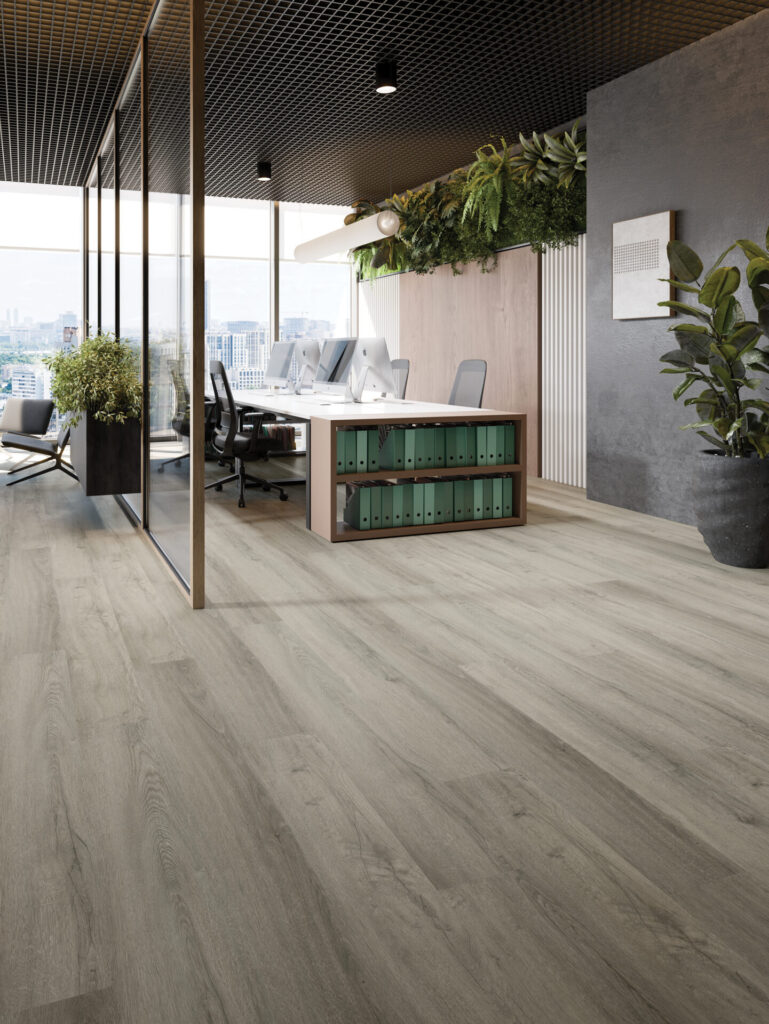
On the commercial side, Mohawk Group has added PVC-free options to its Hot & Heavy II resilient tile collection with Secoya 3.0 PVC Free resilient planks and Bolder 3.0 PVC Free resilient tiles. A key component of the collection is its Red List Free status. Secoya 3.0 features wood-inspired visuals available in 17 colors, while Bolder 3.0 offers concrete and metallic-inspired designs in 11 colors.
Mohawk Group says the 3mm PVC-free platform was engineered to work alongside EcoFlex Matrix-backed carpet tile products, eliminating the need for transition strips and simplifying installation.
The Hot & Heavy II collection also carries Mohawk Group’s Beyond Carbon Neutral designation, which includes an additional 5% carbon offset intended to create a net-positive environmental impact.
Tarkett’s non-PVC offering ranges from traditional products like linoleum and rubber flooring, updated for design and performance to resilient products designed as alternatives to vinyl.
Two years ago, Tarkett launched its Layered Duality collection, made up of four carpet tile designs and two non-PVC resilient plank styles that are FloorScore certified and Red List Free, per the Living Future (International Living Future Institute) standards.
Around the same time, Tarkett introduced Collective Pursuit, a collection of resilient tile and plank made of the same polyolefin-based chemistry as Layered Duality, in four styles—three woods and a stone.
According to the firm, these vinyl flooring alternatives were developed “in response to market demands for a high-performance, non-PVC surface that rivals traditional LVT in dimensional stability, impact resistance and ease of maintenance.”
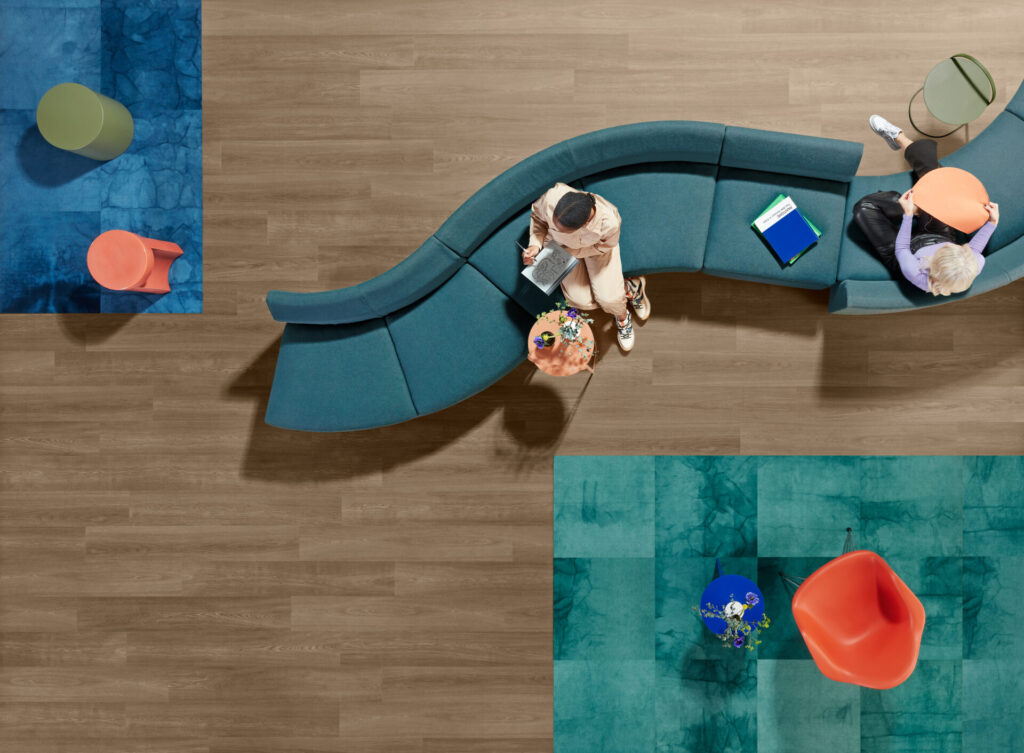
As mentioned above, Shaw Contract introduced EcoWorx Resilient in 2022. The polyolefin-based product was developed as an alternative to traditional vinyl flooring and is manufactured without PVC or phthalates. The product builds on the EcoWorx platform developed for carpet tile backings in 1999, with an established closed-loop recycling system in place. Patcraft offers the same type of product with different aesthetics.
According to Shaw, EcoWorx Resilient is designed to deliver durability, dimensional stability and maintenance performance comparable to premium LVT products. The flooring is also
designed for circularity and can be returned through Shaw Contract’s reclamation program for recycling at the end of its lifecycle.
Shaw says EcoWorx Resilient is priced competitively with premium LVT offerings and is intended to provide a PVC-free option without a significant cost premium. The product line is available in plank and tile formats and includes wood, stone and abstract visuals designed for commercial environments including workplace, healthcare, education and hospitality spaces.
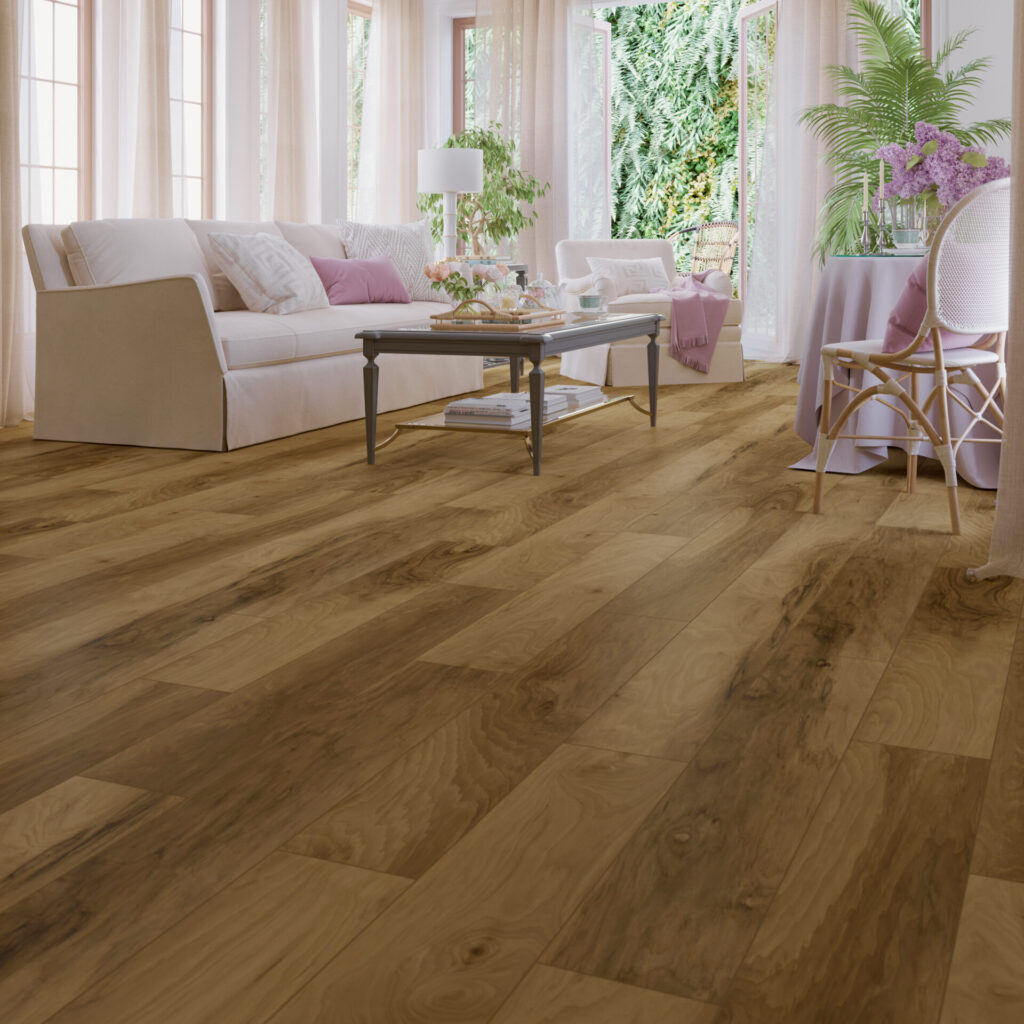
CFL offers PVC-free eco-composite flooring products designed as alternatives to traditional vinyl flooring. Introduced several years ago, its waterproof flooring lines are manufactured without PVC or plasticizers and feature a core made from up to 80% natural organic and mineral content.
According to the company, the core utilizes up to 100% post-consumer recycled materials, contributing to a total product composition containing up to 89% post-consumer recycled content. The products also include a pre-attached cork underlayment intended to further support the firm’s sustainability profile.
The company says the product is designed to provide greater stability and performance than conventional vinyl products. Features include waterproof construction, increased resistance to micro-scratches and stains, enhanced fire and smoke ratings, and a Class 33 commercial wear rating. Its dimensional stability allows installations across areas as large as 10,000 square feet without the use of transition moldings.
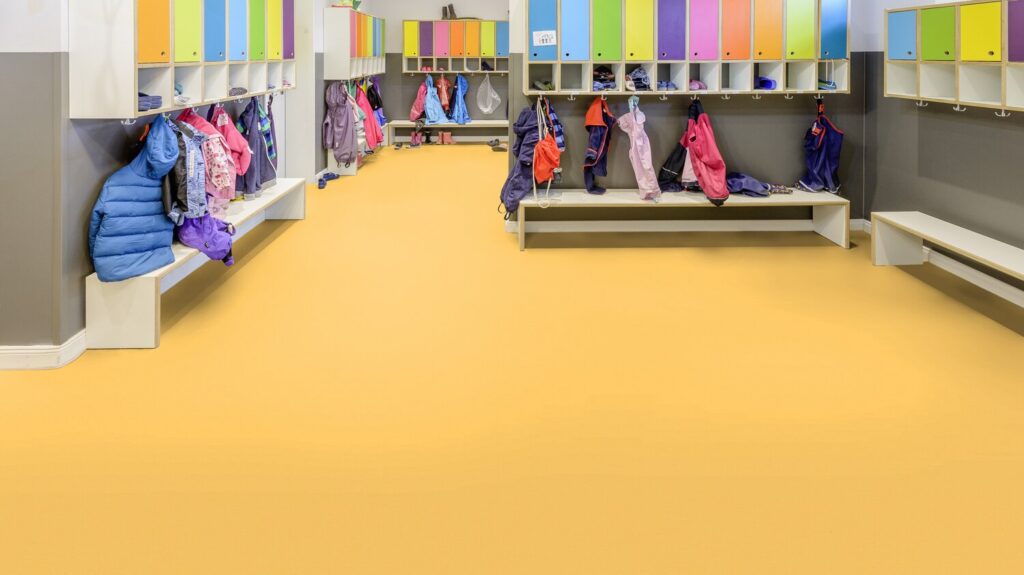
Gerflor continues to expand its portfolio of PVC-free and bio-based resilient flooring products across commercial categories, including sheet flooring, LVT, linoleum and sports flooring. The company’s PVC-free product offerings include Mipolam Evo homogeneous sheet flooring and Creation Evo PVC-free resilient tile. The firm also produces linoleum. Gerflor says the vinyl alternatives are designed to match the durability, maintenance and lifecycle performance of conventional vinyl flooring.
The company notes that the products are intended to provide a comparable cost profile to traditional vinyl flooring.
Mipolam Evo uses a proprietary PVC-free polymer blend in a homogeneous construction, while DLW Linoleum is manufactured with 98% natural materials and up to 40% recycled content.
The company says interest in flooring products with bio-based content, circularity and verified health attributes continues to increase, particularly in healthcare, education and public environments.
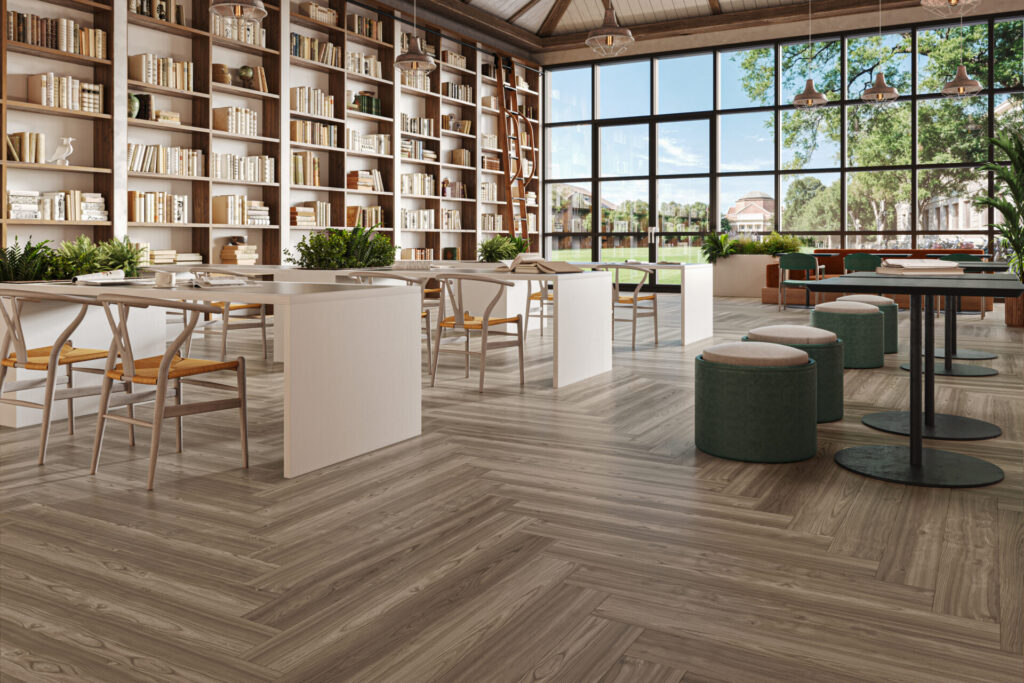
Milliken’s current PVC-free resilient offerings include En Plein Air, Mesa and Merge Forward, all of which are PVC-free and Red List Free. According to Milliken, the products are designed to support healthier indoor environments and align with sustainability initiatives and certifications including LEED and WELL.
Merge Forward was introduced in 2023, followed by Mesa and En Plein Air. Milliken is also preparing to launch the newest addition to its PVC-free portfolio during Design Days in June: a 100% polyester hybrid flooring product.
The collections feature a 20 mil wearlayer and Milliken’s ProGuard Max coating for stain and scuff resistance. The company positions PVC-free flooring as an accessible alternative that balances environmental goals with performance, design and value.
HMTX says its Teknoflor Healthscapes HPD resilient sheet flooring was developed as a PVC-free flooring option for healthcare environments, with an emphasis on material transparency, durability and infection control.
The flooring is manufactured using TPU and features a homogeneous construction intended to withstand heavy traffic and rolling loads. HMTX says the product’s seamless installation design can support infection-control requirements commonly found in healthcare settings.
Healthscapes HPD features a visual appearance incorporating glass-like chips suspended throughout the surface, and it comes in a range of neutral and vibrant hues.
According to the company, the product does not contain PVC, Red List chemicals, plasticizers, orthophthalates, halogens or isocyanates. HMTX also says the flooring includes a “no buff, no wax” finish intended to reduce maintenance requirements and lifecycle costs.
Inhaus says Ceramin is its flagship PVC-free flooring product, designed as a performance-driven and sustainability-focused alternative within the resilient flooring category. Manufactured in Germany, Ceramin is made using a patented compound of polypropylene and mineral powder intended to provide durability, dimensional stability and waterproof performance.
According to Inhaus, Ceramin, targeting the residential market, does not contain PVC, formaldehyde, phthalates or plasticizers and incorporates at least 25% post-consumer recycled content. The company also says the flooring is fully recyclable at the end of its lifecycle.
Inhaus says Ceramin is positioned as a premium flooring option and is priced above lower-end LVP and SPC products, and its sustainability and product performance efforts are supported by certifications including GreenGuard Gold, Blue Angel, Declare, Cradle to Cradle and EPDs.
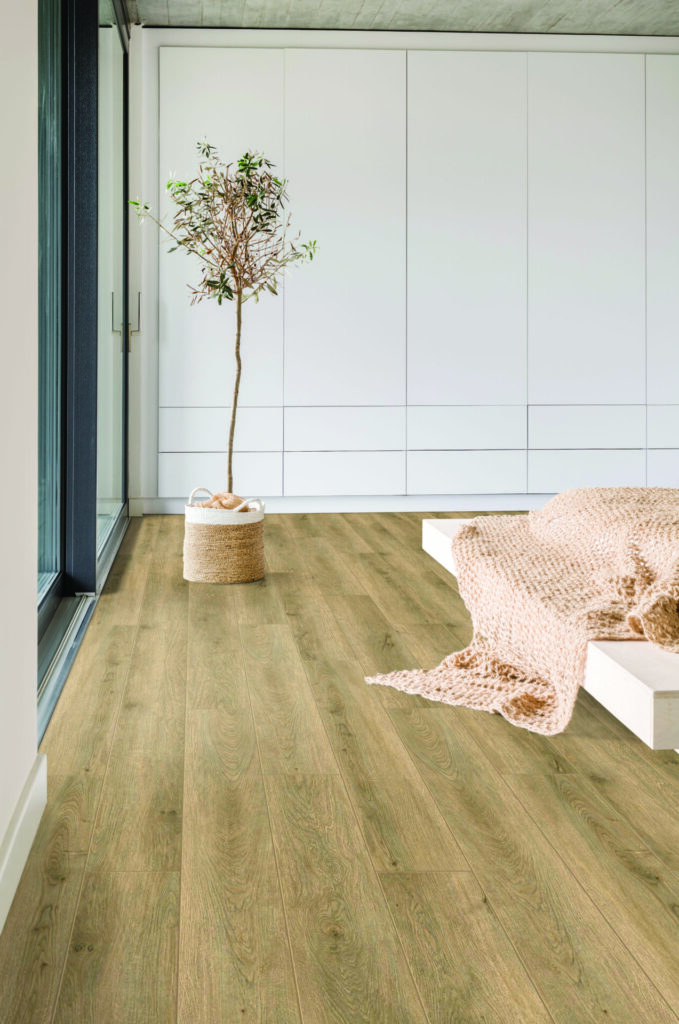
Nox, a South Korean company with U.S. manufacturing, has developed a PVC-free flooring product designed to deliver the appearance and performance characteristics of luxury vinyl tile, with TPU as the foundation for the product because of its durability, elasticity, abrasion resistance and recyclability.
The company soft launched its LUT (luxury urethane tile) product, Evereco+, in 2025. According to Nox, the product combines TPU technology with a multi-layer construction engineered for dimensional stability, durability and design flexibility.
Nox says Evereco+ incorporates a proprietary coating and wearlayer formulation designed to provide scratch-recovery performance for everyday wear. The company also notes that 72% of the TPU used in the product is recycled material, including repurposed air cushions from athletic footwear, and the flooring is fully recyclable at the end of its lifecycle.
Windmoeller is positioning Purline as a distinct flooring category built around bio-based polyurethane rather than as simply another PVC-free alternative. The Germany-based manufacturer, which has operated for 75 years and serves the U.S. market through its Marietta, Georgia-based subsidiary, says growing interest in material health and sustainability continues to drive attention toward alternative flooring materials, though performance remains a primary consideration.
Purline uses a thermoset polyurethane construction rather than the thermoplastic structures commonly found in PVC products. According to the company, that manufacturing approach is intended to provide performance, design flexibility and sustainability benefits while avoiding materials commonly associated with traditional resilient flooring.
The product is designed around bio-based materials and focuses on material transparency through third-party certifications and documentation, including Cradle to Cradle certification, Declare Red List Free labeling, GreenGuard Gold, FloorScore and product-specific environmental declarations.


Join Our Newsletter
Get the latest flooring industry news delivered weekly.