




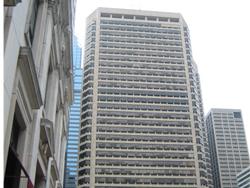
David Lereah, NAR’s chief economist, said an irony in today’s commercial real estate market is that some flush tenants are contributing to rising vacancies. “Job growth has been fueling the demand for space, notably in the office sector,” he said. “Even so, some tenants are not ‘back filling’ vacated space as they move to higher quality new space, contributing to a modest gain in vacancy rates. Office, hotel and industrial properties continue to be the most sought after commercial sectors for investment.”
Outside of the hospitality sector, investors channeled a record $306.8 billion to commercial real estate in 2006, up from $276.0 billion in 2005; that total does not include transactions valued at less than $5 million. An additional $35.3 billion was invested in the hotel sector; however, long-term historic comparisons are not available for the hospitality market.
Cindy Chandler of
Most of the new commercial space has been build-to-suit, or with significant pre-leasing in place.
Office Market
A flight to quality office space, notably in new buildings, will raise vacancy rates in older class B and class C buildings. In addition, employers are using space more efficiently through telecommuting and “office hotelling.” Speculative new construction is being held in-check.
Office vacancies are expected to rise to an average of 13.9 percent by the end of the year from 12.6 percent in the fourth quarter of 2006. Annual rent growth in the office sector is forecast at 3.2 percent in 2007, following a 5.2 percent gain last year.
Estimates for the first quarter show areas with the lowest office vacancies include
Net absorption of office space in 56 markets tracked, which includes the leasing of new space coming on the market as well as space in existing properties, is projected to be 21.9 million square feet this year, down from 76.2 million in 2006.
Office building transaction volume set a record of $133.6 billion trading hands last year, up 32 percent from 2005.
Industrial Market
Vacancy rates in the industrial sector should average 10.1 percent by the end of the year, up from 9.4 percent in the fourth quarter of 2006. Annual rent growth is likely to be 2.3 percent by the fourth quarter, up from a 1.4 percent annual gain in the fourth quarter of 2006.
Net absorption of industrial space in 54 markets tracked is estimated at 75.9 million square feet in 2007, down from 189.1 million last year.
Industrial transaction volume in 2006 was a record $38.9 billion, up 9 percent from 2005.
Retail Market
Consumer confidence is rising at a fairly slow pace, but a sluggish housing market and economic concerns are dampening consumer spending and, possibly, demand for retail space.
Vacancy rates in the retail sector will probably slip to 8.1 percent in the fourth quarter of 2007 from 8.2 percent in the same quarter last year. Average retail rent is expected to grow 1.1 percent this year, following a 3.9 percent gain in 2006.
Retail markets with the lowest vacancies include
Net absorption of retail space in 54 tracked markets is projected at 19.9 million square feet in 2007, up from 8.4 million in 2006.
Retail transaction volume declined 7 percent in 2006 to a total of $46.9 billion; much of the decline was in regional shopping centers. However, unanchored strip centers, free-standing drug stores and big box retail centers saw large gains. At the same time, pricing for retail space rose 13 percent in 2006 to an average of $168 per square foot.
Multifamily Market
In the apartment rental market – multifamily housing – vacancy rates are forecast at an average of 5.9 percent at the end of this year, which would be unchanged from the fourth quarter of 2006. Average rent is likely to rise 2.8 percent in 2007, following a 4.1 percent increase last year.
With the condo conversion craze coming to an end in most markets, multifamily investment is normalizing. Condo converters accounted for $30 billion out of $88 billion in multifamily transactions in 2005, but were down to $9 billion out of $87.4 billion in 2006. Some converted projects are returning to the rental market, and investors are now focused on income appreciation and improving fundamentals.
Multifamily net absorption should total 223,900 units in 59 tracked metro areas in 2007, up from 221,900 last year.
Hospitality Market
Hotel occupancies are expected to average 68.1 percent in 2007, up from 67.8 percent last year. Revenue per available room (RevPAR) is seen at $82.30 this year, up from $78.40 in 2006. A record 45,500 hotel rooms are scheduled to be added to the inventory in 52 markets tracked this year, compared with 22,000 in 2006.
Markets with the highest RevPAR include
For properties valued at $5 million or more, transaction activity during 2006 totaled 1,166 hotels with a combined value of $35.3 billion, nearly 20 percent higher than 2005.



Join Our Newsletter
Get the latest flooring industry news delivered weekly.